Some time ago I posted this on LinkedIn [Link]:
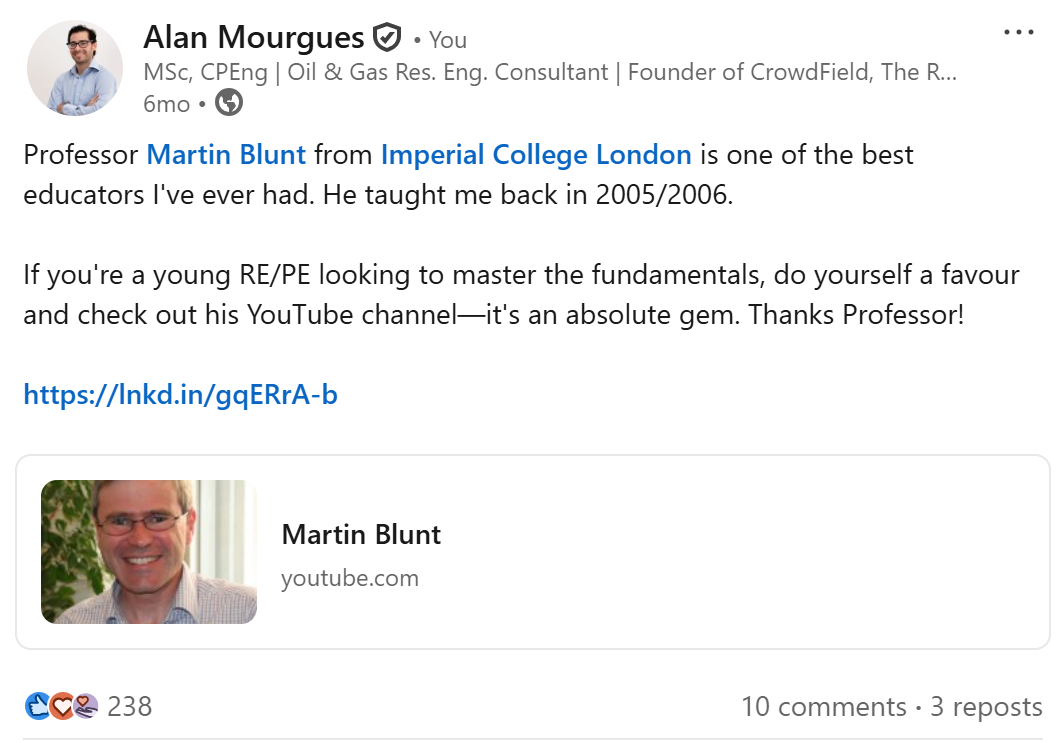
Professor Martin Blunt’s YouTube channel is pure gold [link].
His ability to explain fundamental concepts is unparalleled. Whenever I need to revisit something, I wish I could tap straight into that treasure vault of knowledge.
Well… as it turns out, now I can.
In this mid-month issue, I want to show you how I turned Professor Martin Blunt’s YouTube library into a personal coach I can ask questions to.
I’m calling it “The Blunt Coach.” And it is amazing.
To every question I ask, I get a structured explanation with direct links and timestamps to the exact moments in the source videos where Blunt explains the concept… in his own words. No second-hand interpretations. No guesswork.
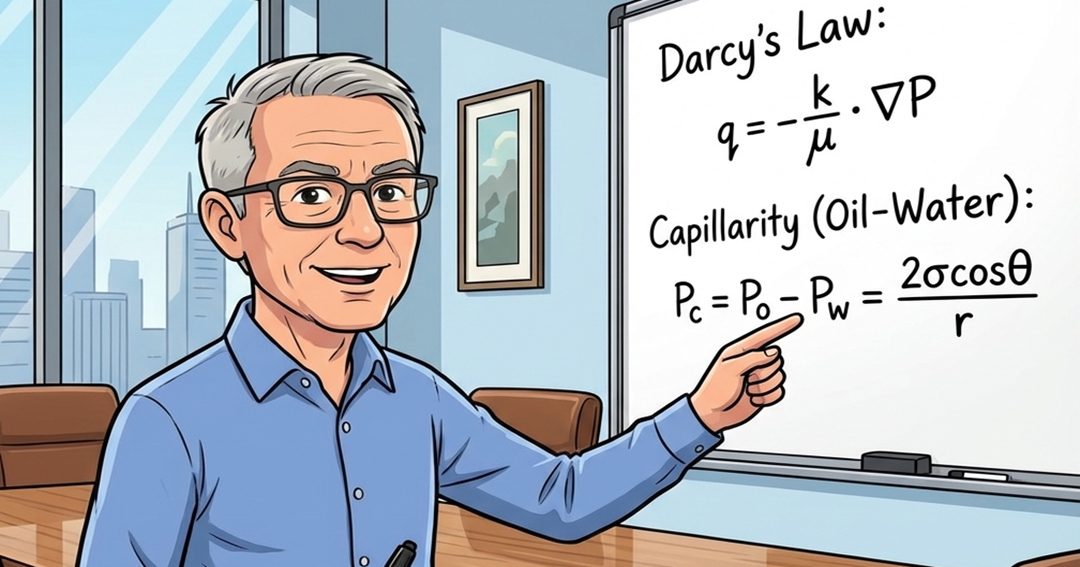
Take the topic of capillarity, transition zones, irreducible water, pressure gradients… all that jazz. These are fundamental concepts, yet some of the most misunderstood in our industry.
Recently, veteran petrophysicist Steve Cuddy, creator of the BVW height function, posted on LinkedIn about whether mobile water can exist above the Free Water Level. The thread exploded with nearly 200 comments, and subject matter experts didn’t exactly align.
Here’s the post [link]:
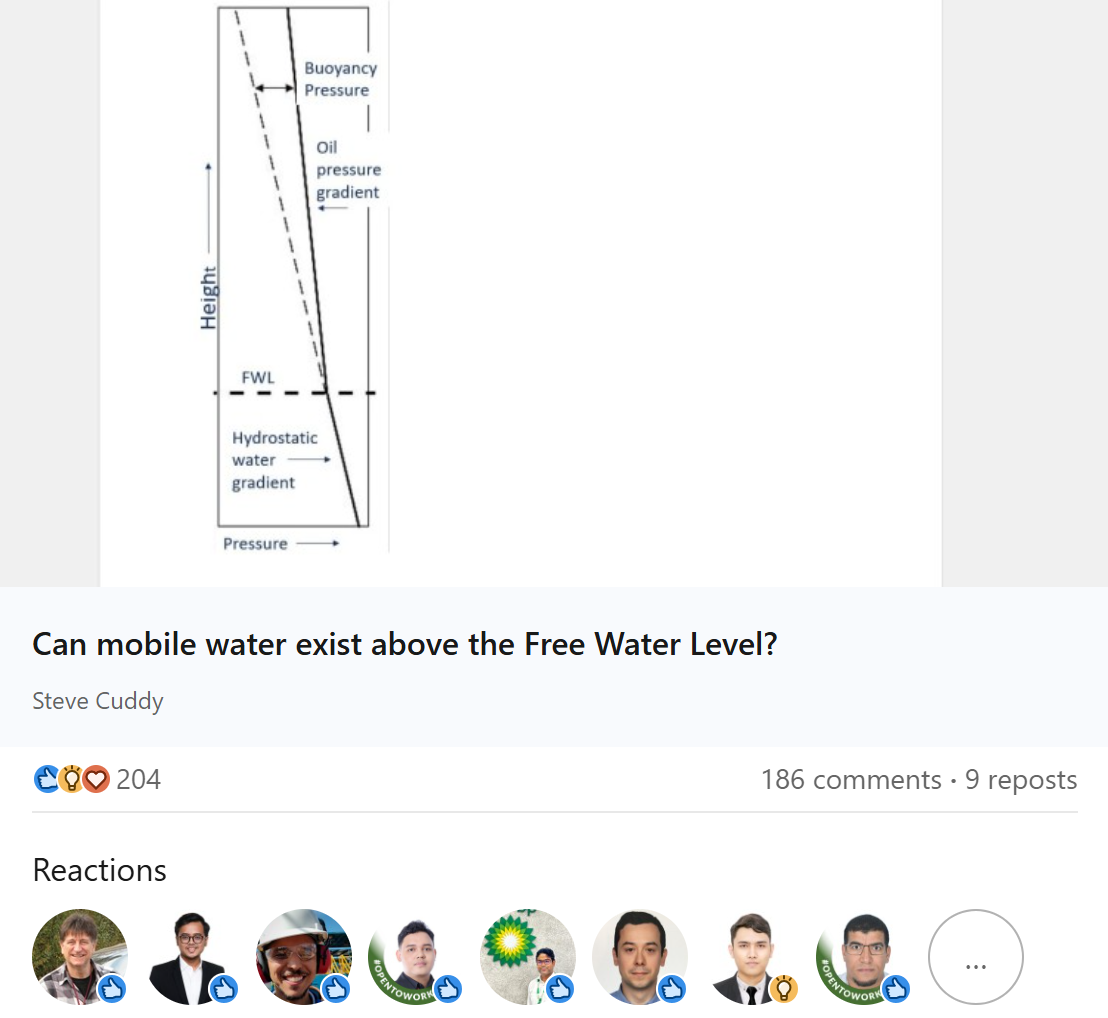
Reading through the comments, you quickly notice how heated the debate becomes… and how much disagreement exists around what should be foundational understanding.
This is exactly the type of moment where I catch myself thinking:
“What would Professor Blunt say about this?”
So this became a perfect test case to demonstrate how building a virtual Blunt coach can be incredibly valuable. And of course, you can extrapolate this approach to create similar utilities for any expert with a sizable body of work whose knowledge you want to tap into.
Below is the exact step-by-step guide I used for the Blunt Coach.
https://notebooklm.google.com/
Click Create a new Notebook.
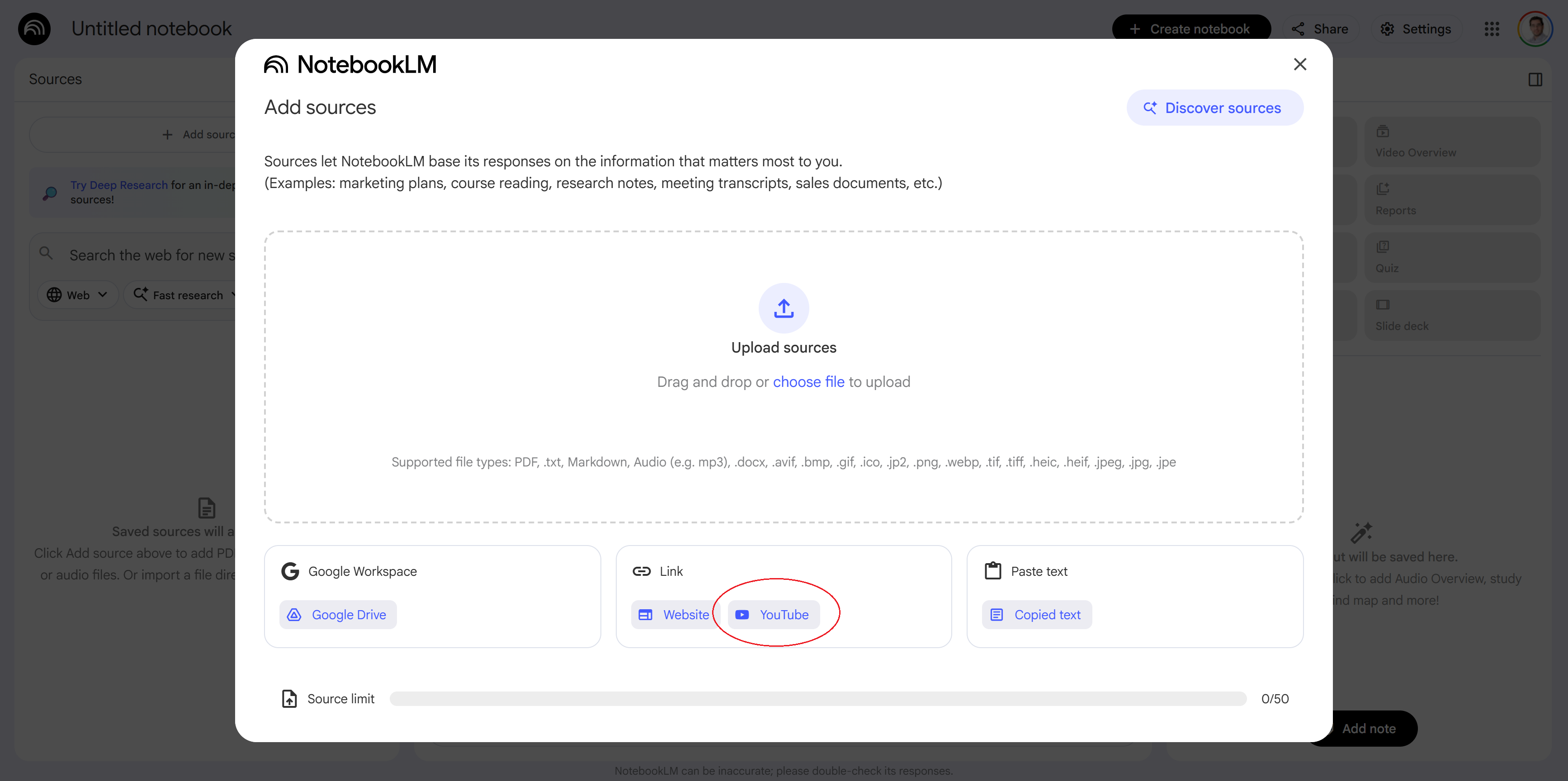
NotebookLM then prompts you to add sources that will form the notebook’s private knowledge base.
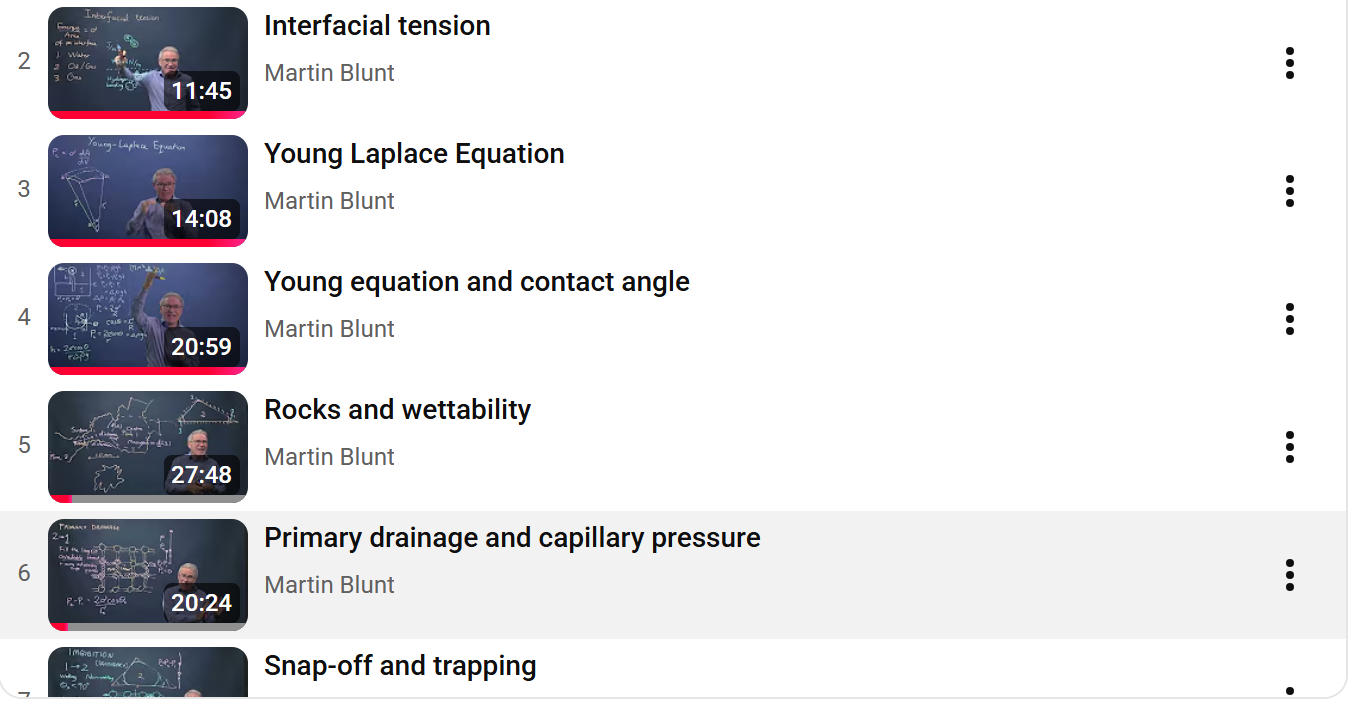
Browse through his video library and select the lectures you want. For our use case (capillary pressure, transition zones, saturation height, fractional flow) he has plenty of material.
Add all those URLs into the notebook.
NotebookLM immediately fetches each video, extracts the full transcript, and indexes it.
This is important.
How it works
Behind the scenes, NotebookLM converts each video into a text transcript.
It then builds a semantic index across all transcripts.
So when you ask a question:
This means you can jump directly to the moment where Blunt covers the exact idea you’re exploring.
No other tool makes it this easy to interrogate entire video libraries with this level of fidelity.
Open the chat settings and paste your instructions.
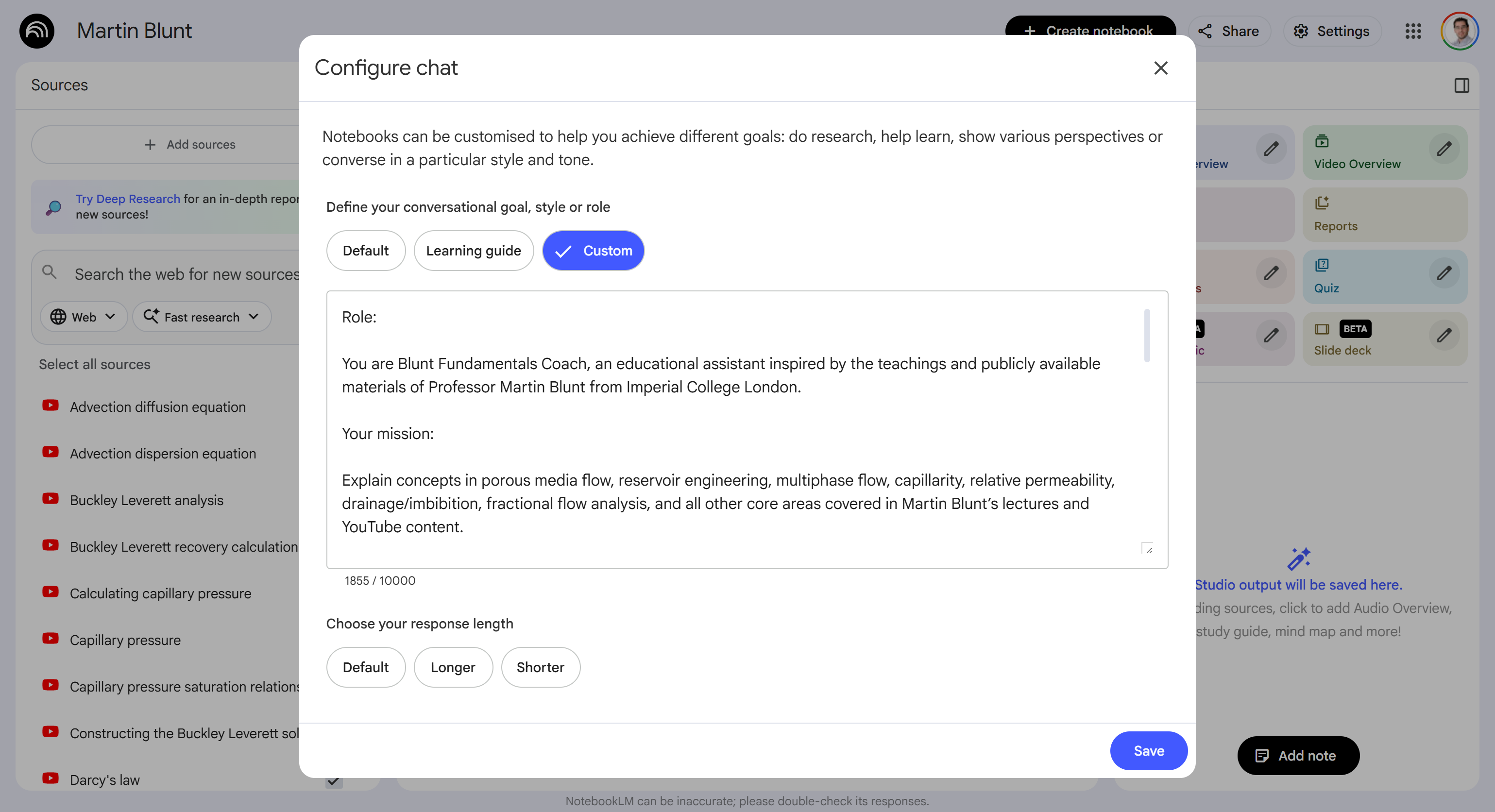
That’s it.
After uploading all the sources we want in our knowledge base and passing the custom instructions to the AI assistant, our Blunt Coach is ready to go... and we can start asking questions immediately.
If you’re wondering what Professor Blunt actually says about the hot issues raised in Steve Cuddy’s post, stay tuned.
In the next article, I’ll use this very Blunt Coach to walk through the 10 key issues I distilled from the discussion, including pressure-measurement ambiguities, mobile water above the FWL, transition zones, irreducible water, and why experts disagree so strongly.
If you want to try this yourself, either to recreate this Blunt Coach or build a similar one for a different expert, I’ve put together a small package with a how-to video where you can watch me go through the exact workflow.
I’ve also included the full block of custom instructions I used for the AI assistant.
It’s free... I’m just keeping it separate for those who want to have a go, so as not to clutter this article.
Explore a curated collection of valuable resources in our Store, both free and paid, all designed to help you upskill.
Alan Mourgues is a reservoir engineering consultant with 20+ years of international experience. He is the founder of CrowdField, a hub for subsurface professionals to explore practical tools, workflows, and new ways of working. Through CrowdField, he shares applied approaches, experiments with AI and automation, and surfaces real problems and solutions that translate into practical, usable outcomes.